How to Use the Blanket Yarn Calculator
-
1
Select your blanket size from the preset list, or choose Custom size and enter your own width and length.
-
2
Choose your craft type — crochet, knitting, Tunisian crochet, or hand knit. Each technique uses yarn at a different rate.
-
3
Select your yarn weight from the label. Worsted (CYC 4) is the most common for blankets.
-
4
Pick your stitch density. A basic single crochet or stockinette is "Basic stitch." Cables and bobbles use significantly more yarn.
-
5
Enter the yardage per skein from your yarn label. Most worsted skeins are 200 yards.
-
6
Set an extra buffer. A 10% buffer is standard; add more for complex stitches or when matching dye lots is uncertain.
-
7
Optionally enter the price per skein to get an estimated cost.
How Much Yarn Do I Need for a Blanket?
The amount of yarn needed for a blanket depends on four main factors — blanket size, yarn weight, craft technique, and stitch pattern. A worsted weight throw blanket in basic single crochet typically requires around 1,500 to 2,000 yards. A knitted throw in the same yarn runs closer to 1,200 to 1,600 yards. Heavier yarns like bulky and super bulky use fewer yards per square inch but may have fewer yards per skein.
This calculator uses empirical yards-per-square-meter factors for each yarn weight class, then applies multipliers for your craft type and stitch density. Results are estimates — your gauge, tension, and specific stitch pattern will affect the final amount. Always add a buffer and buy extra skeins from the same dye lot.
Blanket Yarn Chart by Size
| Blanket size | Dimensions | Approx. yards (crochet) | Approx. yards (knitting) |
|---|---|---|---|
| Baby blanket | 30 × 36 in | ~680 yd | ~580 yd |
| Crib blanket | 36 × 52 in | ~1,170 yd | ~990 yd |
| Lap blanket | 36 × 48 in | ~1,080 yd | ~920 yd |
| Throw blanket | 50 × 60 in | ~1,880 yd | ~1,600 yd |
| Twin blanket | 66 × 90 in | ~3,720 yd | ~3,160 yd |
| Queen blanket | 90 × 100 in | ~5,630 yd | ~4,790 yd |
| King blanket | 108 × 100 in | ~6,760 yd | ~5,740 yd |
What Affects Blanket Yarn Yardage?
Blanket size is the biggest driver of yardage. Doubling the blanket dimensions roughly quadruples the yarn needed because area scales with both width and length. A queen blanket uses about three times as much yarn as a throw blanket.
Yarn weight
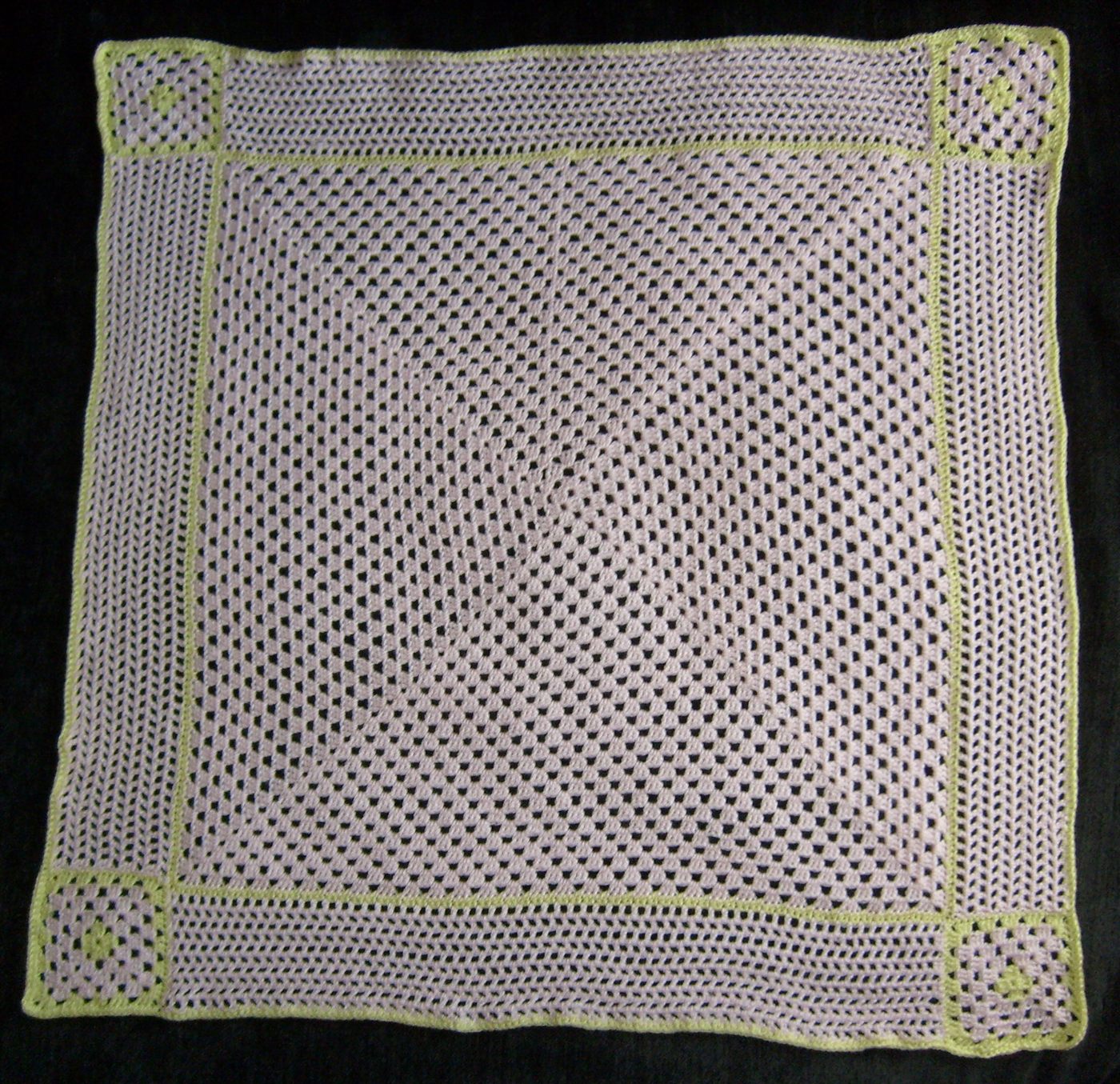
Heavier yarn weights have fewer yards per ounce, which means you reach your square footage faster but need fewer total yards. Lace and fingering weights require dramatically more yardage than bulky yarn for the same blanket size. A lace blanket can require four to five times the yardage of a jumbo or arm-knit blanket of the same size.
Crochet vs. knitting
Crochet stitches wrap yarn around the hook more times than knitting stitches, so crochet typically uses 15 to 30 percent more yarn for the same blanket. Tunisian crochet falls between the two. Arm knitting produces a very open, loose fabric and uses the least yarn of any common blanket technique.
Stitch pattern
Stitch density can change yardage by 50 to 100 percent compared to a basic stitch. Cable stitches cross yarn back on itself, consuming significantly more length. Puff and bobble stitches create three-dimensional texture by pulling through multiple loops, and can double the yarn requirement of a flat single crochet. Lace and shell stitches, conversely, use less yarn than a dense stitch.
Gauge and tension
Gauge is the number of stitches per inch and determines how your yarn fills the blanket dimensions. Tight knitters or crocheters use more yarn to cover the same area; loose workers use less. If your gauge differs from a pattern's gauge, the yarn requirement will shift accordingly. Working a gauge swatch before starting a large blanket project helps catch these differences early.
How Many Skeins of Yarn Do I Need?
To find skeins needed, divide your total yarn requirement (with buffer) by the yardage per skein, then round up. For example, if you need 1,980 yards with buffer and your skein is 220 yards, you need 9 skeins. Always round up — it is better to have one extra skein than to run out mid-project.
When buying multiple skeins, check that all skeins share the same dye lot number. Colors can shift between dye lots, and the difference may only become visible after washing. Most yarn stores will accept unused, intact skeins from the same lot for exchange.
Baby Blanket, Throw Blanket, and King Blanket Examples
A baby blanket in worsted / basic crochet needs about 680 yards before buffer — roughly 4 skeins of 200-yard yarn with a 10% buffer included. The same baby blanket in bulky yarn drops to roughly 380 yards, or 2 skeins of 220-yard bulky.
A throw blanket in worsted / basic crochet needs about 1,880 yards before buffer — roughly 10 to 11 skeins of 200-yard yarn with a 10% buffer. In bulky the same throw needs about 1,060 yards, or 5 to 6 skeins of 220-yard bulky.
A king blanket in worsted / basic crochet needs about 6,760 yards — roughly 38 skeins of 200-yard yarn with a 10% buffer. For a king arm-knit blanket in jumbo weight, expect roughly 600 to 700 yards total, which often fits in 1 to 2 large hanks depending on hank size.
Should You Buy Extra Yarn?
Yes. A 10 percent buffer is the standard recommendation and covers minor gauge differences, swatch waste, and fringe or edging. For cables, bobbles, colorwork, or any blanket with sections worked separately and sewn together, a 15 to 20 percent buffer is safer.
Dye lots are the most practical reason to buy extra upfront. Yarn manufacturers dye each batch separately, and the color from a different lot may be subtly off — a mismatch that is often invisible until the blanket is finished and washed. Most online retailers and yarn stores cannot guarantee dye lot matches for reorders.