
How Big Will My Puppy Get?
Enter your puppy's age and current weight above, then select the likely adult size and sex. The calculator estimates an adult weight range, shows how much of that growth is already done, and tells you roughly when your puppy should reach full size.
How the Puppy Growth Calculator Works
The calculator starts with your puppy's age and current weight, then adjusts the result based on likely adult size, sex, and optional parent weight. Puppy growth is not linear — it slows as the puppy approaches adult size — so the raw formula result is corrected using a size-specific growth curve. Toy and small puppies mature much faster than large and giant ones, so the size you select changes the estimate significantly.
Puppy Adult Weight Formula
The starting point for the estimate is a linear projection from current age and weight. This raw number is then adjusted by size category and sex:
Adult weight ≈ (current weight ÷ age in weeks) × 52
Why the formula is a starting point, not an answer
The formula above treats growth as perfectly uniform from birth to adulthood, which is not how puppies actually develop. Puppies grow very fast early on and then slow down as they approach adult size. A 16-week toy puppy and a 16-week Great Dane puppy are not at the same stage of development relative to their adult size, so a flat multiplier from age and current weight will overestimate some dogs and underestimate others.
This calculator adjusts the raw formula result using size-specific growth benchmarks, which is why the result is shown as a range rather than a single number. The range reflects normal variation within each size category.
Puppy Growth Chart by Size
Approximate adult size ranges and typical timing for reaching near-adult size. Individual puppies can fall outside these ranges.
| Size | Adult Weight Range | Usually Near Adult Size | Notes |
|---|---|---|---|
| Toy | Under 12 lb / 6 kg | 6–9 months | Can reach adult weight before full dental maturity. |
| Small | About 13–20 lb / 6–10 kg | 8–10 months | Growth slows noticeably around 6 months. |
| Medium | About 20–50 lb / 10–25 kg | Up to 12 months | Weight gain tapers in the final 2–3 months. |
| Large | About 50–100 lb / 25–45 kg | 12–18 months | Skeletal maturity lags behind visible size. |
| Giant | Over 100 lb / 45 kg | Up to 24 months | Avoid high-impact exercise until growth plates close. |
When Do Puppies Stop Growing?
Puppies do not all finish growing at the same age. The most important factor is how large the dog will be as an adult. Small puppies may reach adult size by about 6–10 months, while large and giant puppies may keep growing for 12–24 months. This is why a puppy weight calculator should account for likely adult size rather than assuming all dogs mature at 12 months.
Most puppies reach most of their adult weight before they are fully skeletally mature. A puppy may look close to adult size but still have growth plates that are open and bones that are still hardening — one reason veterinarians often recommend waiting before high-impact exercise for large breeds.
Toy, Small, Medium, Large, and Giant Puppy Growth
- Toy puppies are often near full size by 6–9 months and usually weigh under 12 lb / 6 kg as adults. They reach the finish line fastest of any size group.
- Small puppies often finish much of their growth by 8–10 months and commonly weigh about 13–20 lb / 6–10 kg as adults.
- Medium puppies often approach adult size around 12 months and commonly weigh about 20–50 lb / 10–25 kg as adults.
- Large puppies may keep growing until 12–18 months and commonly weigh about 50–100 lb / 25–45 kg as adults. Skeletal maturity takes longer even if the puppy already looks large.
- Giant puppies can continue skeletal growth until about 24 months and often weigh over 100 lb / 45 kg as adults.
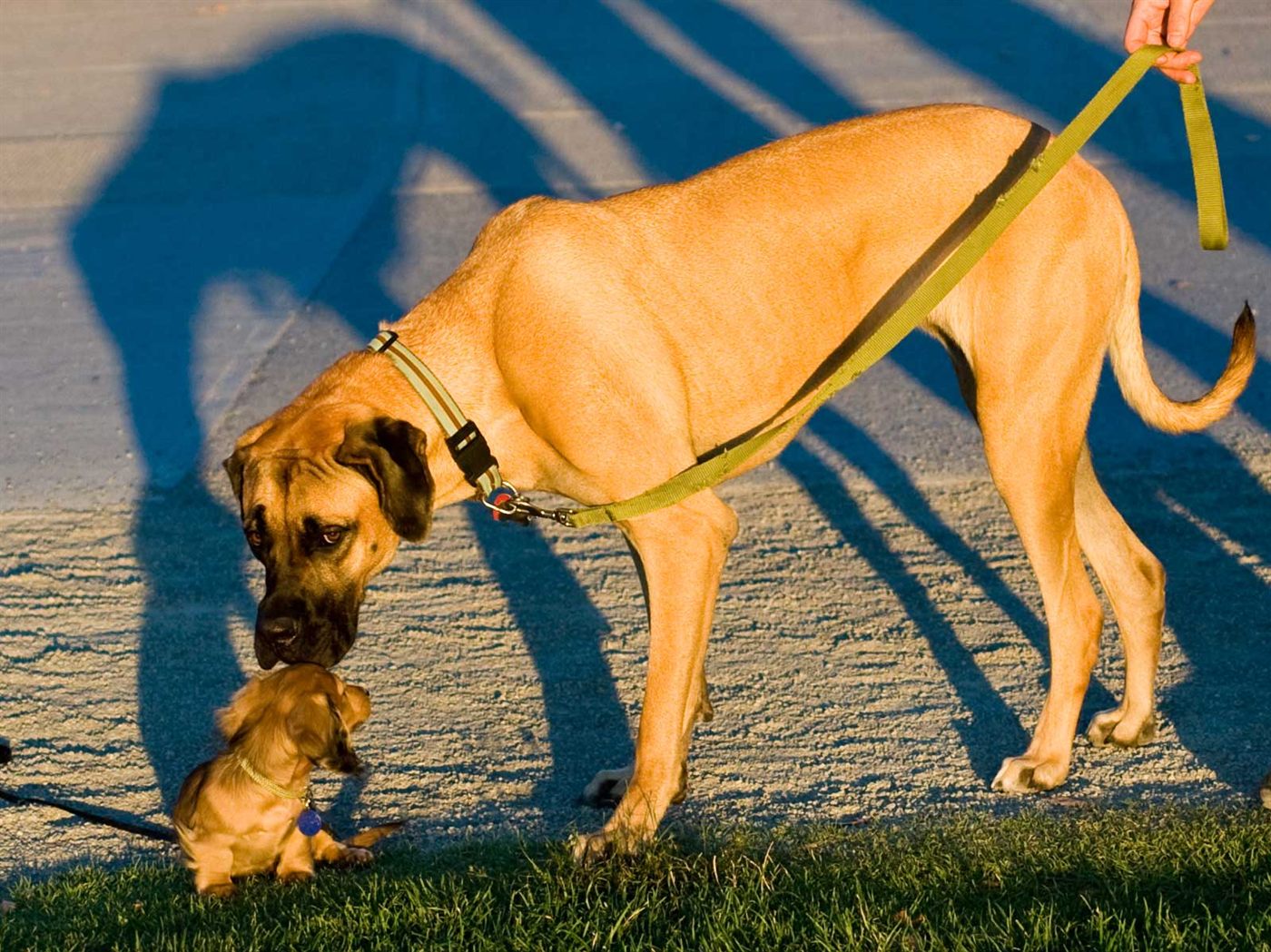
A useful illustration: a 6-month-old Chihuahua is often very close to its adult size, while a 6-month-old Great Dane may only be halfway through its growth period. Both are puppies at the same age, but their growth trajectories are entirely different.
How Accurate Are Puppy Weight Calculators?
A puppy weight calculator gives an estimate, not an exact prediction. How accurate the estimate is depends on how much useful information is entered. Likely adult size is the single most important input — without it, the calculator has no way to apply a size-specific growth curve.
Accuracy improves when:
- The likely adult size is chosen carefully based on breed or both parents' sizes.
- A known parent weight is entered for mixed breed puppies.
- The puppy's current weight is measured on a scale rather than estimated.
- The puppy is at least 8 weeks old and in a normal growth phase, not recovering from illness or a slow start.
The result will always be a range rather than a single number, because normal variation exists even within a size category. Treat it as a likely zone, not a hard limit in either direction.
Mixed Breed Puppy Weight Estimates
Mixed breed puppies can be harder to estimate because their adult size may not map onto a single breed standard. The most practical approach is to select the likely adult size that best matches the puppy's expected build, based on the parents if you know them or on the puppy's current proportions if you do not.
If you know one or both parent weights, enter a parent weight in the optional field. This gives the calculator a real reference point instead of relying only on size category averages. For crosses — say, one medium-sized parent and one large-sized parent — choosing the size category between them is usually the most reasonable approach.
What Can Affect Puppy Growth?
Many factors can push a puppy's adult weight above or below a calculator estimate:
- Sex — Male dogs often grow larger than females within the same breed or size group.
- Genetics and parent size — A puppy from two large parents will often grow larger than a puppy from two smaller parents of the same breed.
- Nutrition — Consistent access to appropriate food supports steady growth. Both underfeeding and overfeeding can affect final adult size and health.
- Health — Parasites, illness, or early developmental setbacks can slow growth. Puppies who recover from illness may partially catch up, but prolonged health problems early in life can affect adult size.
- Activity level — Exercise supports healthy development, but very high-impact activity before growth plates close can cause injury, particularly in large breeds.
Paw size, loose skin, and litter sibling comparisons can offer rough clues but cannot accurately predict adult weight. Age, current weight, likely adult size, and parent size are more useful inputs.
When to Ask Your Veterinarian
A growth calculator can help you prepare questions for your veterinarian, but it is not a substitute for a physical exam. Ask your veterinarian if your puppy:
- Loses weight or stops gaining for more than a week or two
- Stops eating well or has persistent digestive issues
- Gains weight unusually fast, especially for a large or giant breed
- Seems much smaller or larger than expected for the breed or size category
- Looks visibly underweight or overweight
- Limps, seems stiff, or shows any sign of joint pain
Routine puppy wellness visits give your veterinarian the chance to track growth on a weight curve over time, which is a more reliable way to spot problems early than any single weight estimate.
Related pet calculators
A puppy growth calculator estimates adult dog weight from your puppy's current age, current weight, and expected size. Results are best shown as a range because puppies grow at different speeds by breed, sex, genetics, nutrition, and health.