
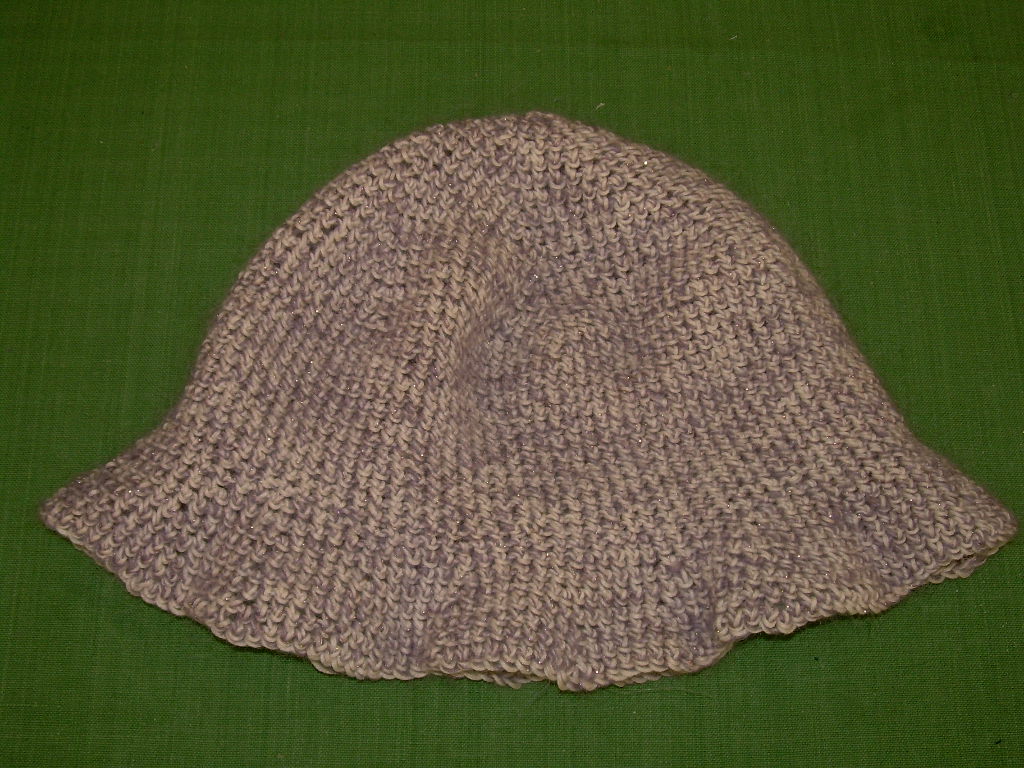
How to Use the Hat Stitch Calculator
-
1
Select your hat size from the preset list, or choose Custom size and enter the head circumference measured around the widest part of the head just above the ears and eyebrows.
-
2
Enter your gauge swatch results — the number of stitches you counted and the width you measured over. Standard gauge is measured over 4 in (10 cm) on a blocked swatch worked in the round.
-
3
Select a fit. Snug fit (−2 in) is the most common choice for fitted beanies. Very snug works for hats worn during activity. Slouchy uses no ease.
-
4
Enter your stitch pattern repeat. Use 2 for 1×1 rib, 4 for 2×2 rib, 1 for stockinette, or the repeat from your cable or lace pattern.
-
5
Choose a rounding direction. Nearest is best for most patterns.
How Many Stitches Should I Cast On for a Hat?
The number of stitches to cast on depends on four things — head circumference, negative ease, stitch gauge, and stitch pattern repeat. A typical adult beanie at worsted gauge (4.5 st/in) with a snug fit on a 22-inch head needs around 90 stitches. The same head in bulky yarn at 3 st/in needs about 60 stitches.
These are starting points. Your actual gauge swatch is the most reliable source. Two knitters using the same yarn and needles can have gauges that differ by a stitch per inch, which shifts the cast-on count by 18 to 20 stitches on an adult hat — enough to move from a snug fit to too loose.
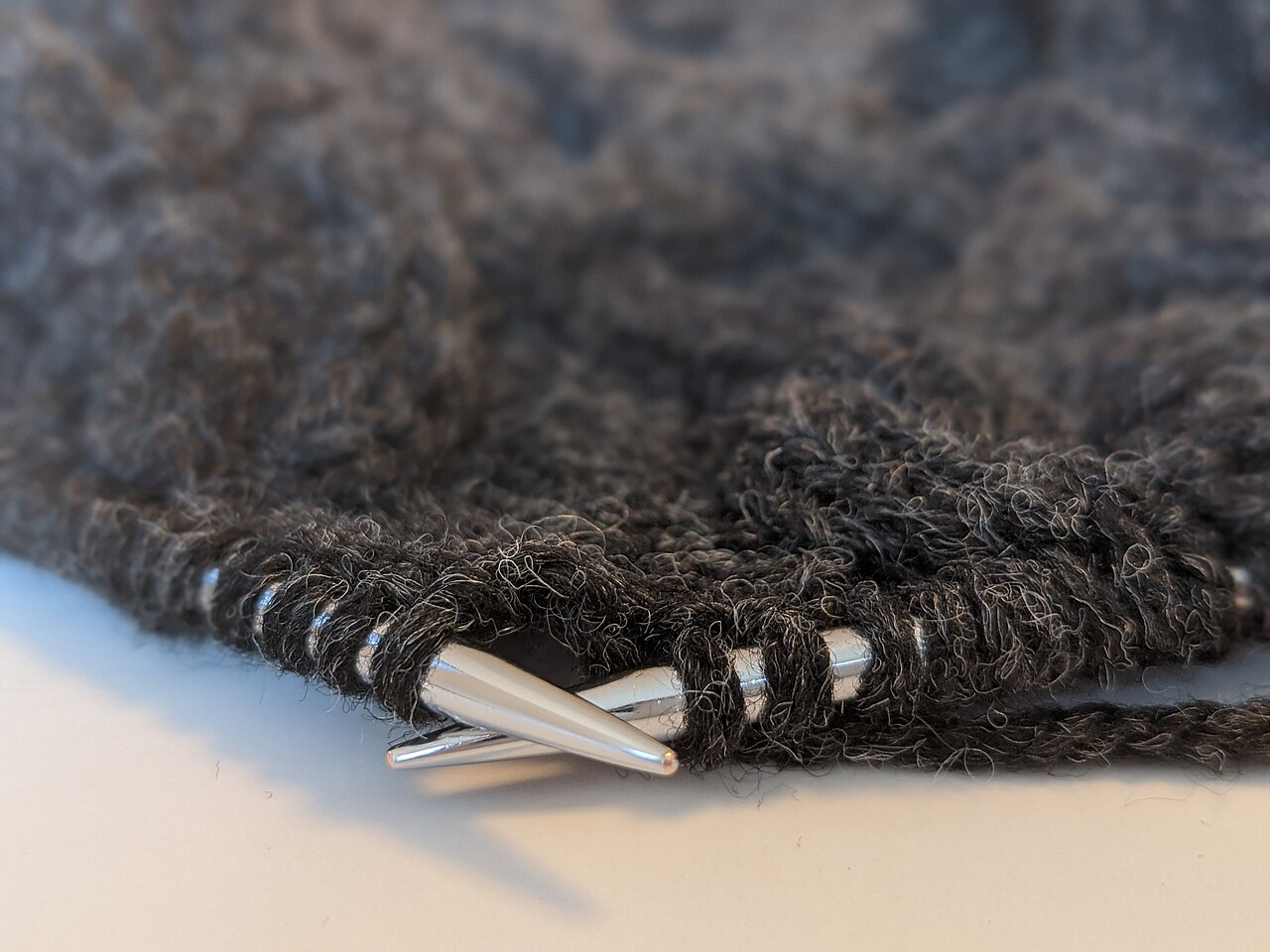
Hat Stitch Count Formula
Three steps to get from head circumference to a cast-on number:
Step 1 — Finished circumference = head circumference − ease
Step 2 — Gauge (st/in) = swatch stitches ÷ swatch width
Step 3 — Raw stitches = finished circumference × gauge
Step 4 — Cast-on = round(raw ÷ repeat) × repeat
Formula Example
Adult beanie, 22 in head, snug fit (−2 in ease): finished circumference = 22 − 2 = 20 in. Swatch: 18 stitches over 4 in → gauge = 18 ÷ 4 = 4.5 st/in. Raw stitches = 20 × 4.5 = 90. For 1×1 rib (repeat 2): 90 ÷ 2 = 45 → 45 × 2 = 90. Cast on 90.
Same head in 2×2 rib (repeat 4): 90 ÷ 4 = 22.5 → round to 23 → 23 × 4 = 92. Or round down: 22 × 4 = 88. Either is correct — choose based on how snug you want the brim.
Hat Stitch Count Chart by Size and Yarn Weight
| Hat size | Head circumference | DK / 5.5 st/in | Worsted / 4.5 st/in | Bulky / 3 st/in |
|---|---|---|---|---|
| Baby | 14–16 in / 36–41 cm | ~66 st | ~54 st | ~36 st |
| Toddler | 18–19 in / 46–48 cm | ~88 st | ~72 st | ~48 st |
| Child | 19–20.5 in / 48–52 cm | ~99 st | ~81 st | ~54 st |
| Teen / Adult S | 21 in / 53 cm | ~104 st | ~85 st | ~57 st |
| Adult medium | 22 in / 56 cm | ~110 st | ~90 st | ~60 st |
| Adult large | 23 in / 58 cm | ~116 st | ~95 st | ~63 st |
| Adult XL | 24 in / 61 cm | ~121 st | ~99 st | ~66 st |
Why Gauge Matters for Hat Sizing
Gauge is the number of stitches per inch in your swatch. It varies with yarn weight, needle size, and how tightly you knit. The same yarn on two different needle sizes can give gauges that differ by a full stitch per inch. For a hat, one extra stitch per inch across a 20-inch finished circumference adds 20 stitches — roughly two inches of extra circumference on the finished hat.
Always measure gauge from a swatch worked in the round. Many knitters have different tension when working flat versus in the round. Measure in the center of the swatch, not at the edges, and measure after blocking.
What Is Negative Ease in Hat Knitting?
Negative ease means the finished hat circumference is intentionally smaller than the head circumference. Knit fabric stretches, so a hat knit 2 inches smaller than the head will stretch to fit snugly. A hat knit exactly to head size will feel noticeably loose.
The standard range for fitted hats is 1 to 2.5 inches of negative ease. A snug beanie for active wear typically uses 2 to 2.5 inches. A relaxed everyday hat uses 1 inch. Slouchy hats use no ease in the cast-on circumference and rely on extra length for the drape effect.
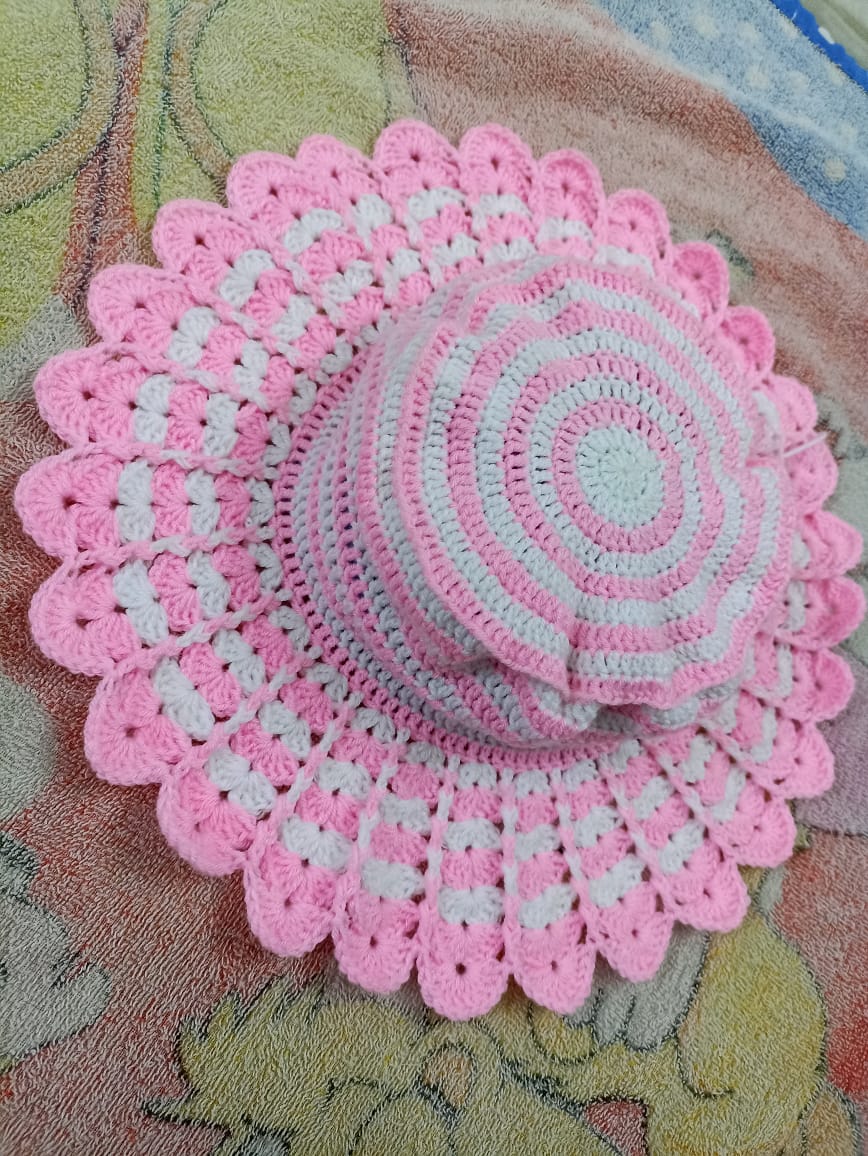
How to Round Your Stitch Count
Most hat patterns use a ribbed brim, which requires a stitch count divisible by the rib repeat. For 1×1 rib (k1, p1) the count must be even — a repeat of 2. For 2×2 rib (k2, p2) it must be divisible by 4. For k2p1 rib, divisible by 3. Cable patterns may require multiples of 6, 8, or 12 depending on the cable structure.
If your raw count is 91 and you are working 2×2 rib, round to 92 for the loosest option, 88 for the snuggest. A difference of 4 stitches changes the circumference by less than one inch at worsted gauge — usually undetectable in the finished hat.
Hat Cast-On Examples
Adult beanie: 22 in head, snug fit (−2 in), 20 in finished. Swatch: 18 stitches over 4 in = 4.5 st/in. Raw count: 20 × 4.5 = 90. For 1×1 rib (repeat 2): cast on 90. For 2×2 rib (repeat 4): round to 88 or 92.
Child hat in DK: 20 in head, snug fit (−2 in), 18 in finished. Swatch: 22 stitches over 4 in = 5.5 st/in. Raw count: 18 × 5.5 = 99. For 1×1 rib (repeat 2): round to 100. For 2×2 rib (repeat 4): round to 100 or 96.
Ribbed beanie with a cable panel: 22 in head, very snug (−2.5 in), 19.5 in finished. Swatch: 22 stitches over 4 in = 5.5 st/in. Raw count: 19.5 × 5.5 = 107.25. Cable repeat is 12: round to 108 for 9 cable repeats.