
A baker's percentage calculator turns flour weight into a complete bread formula. Enter the flour weight, hydration, salt percentage, and yeast percentage, and the calculator shows exactly how much water, salt, and yeast to use.
How to Use This Baker's Percentage Calculator
-
1
Choose a preset if you want a quick starting point for a beginner loaf, basic bread, pizza dough, or focaccia.
-
2
Enter the total flour weight for your recipe.
-
3
Enter hydration, salt, and yeast as percentages of the flour weight.
-
4
Read the water, salt, yeast, and total dough weight results.
-
5
Change only the flour weight to scale the same formula up or down.
What Is Baker's Percentage?
Baker's percentage is a way to write a bread recipe as a formula instead of fixed ingredient amounts. Flour is always 100%, and every other ingredient is expressed as a percentage of flour weight.
If you double the flour, the rest of the recipe doubles automatically while the dough balance stays the same.
Baker's Percentage Example
| Ingredient | Baker's % | Weight with 500 g flour |
|---|---|---|
| Flour | 100% | 500 g |
| Water | 70% | 350 g |
| Salt | 2% | 10 g |
| Yeast | 1% | 5 g |
Baker's Percentage Formula
These are the two core baker's percentage formulas.
Baker's percentage = ingredient weight ÷ flour weight × 100
Ingredient weight = flour weight × baker's percentage ÷ 100
What Does Hydration Mean in Bread?
Hydration is the water percentage compared with flour weight. If a dough has 500 g flour and 350 g water, hydration is 70%.
Higher hydration usually means a wetter dough. Lower hydration usually means a firmer dough that is easier to shape.
Flour type changes how much water a dough can absorb, so hydration ranges are useful starting points, not hard rules.
Hydration Guide
| Hydration | Typical feel | Common use |
|---|---|---|
| 55-60% | Firmer dough and easier shaping | Tighter doughs and lower-hydration breads |
| 60-68% | Balanced and beginner-friendly | Sandwich bread and basic loaves |
| 70-78% | Wetter artisan-style dough | Open-crumb hearth loaves |
| 80%+ | Very wet dough | Focaccia and ciabatta-style doughs |
How to Scale a Bread Recipe
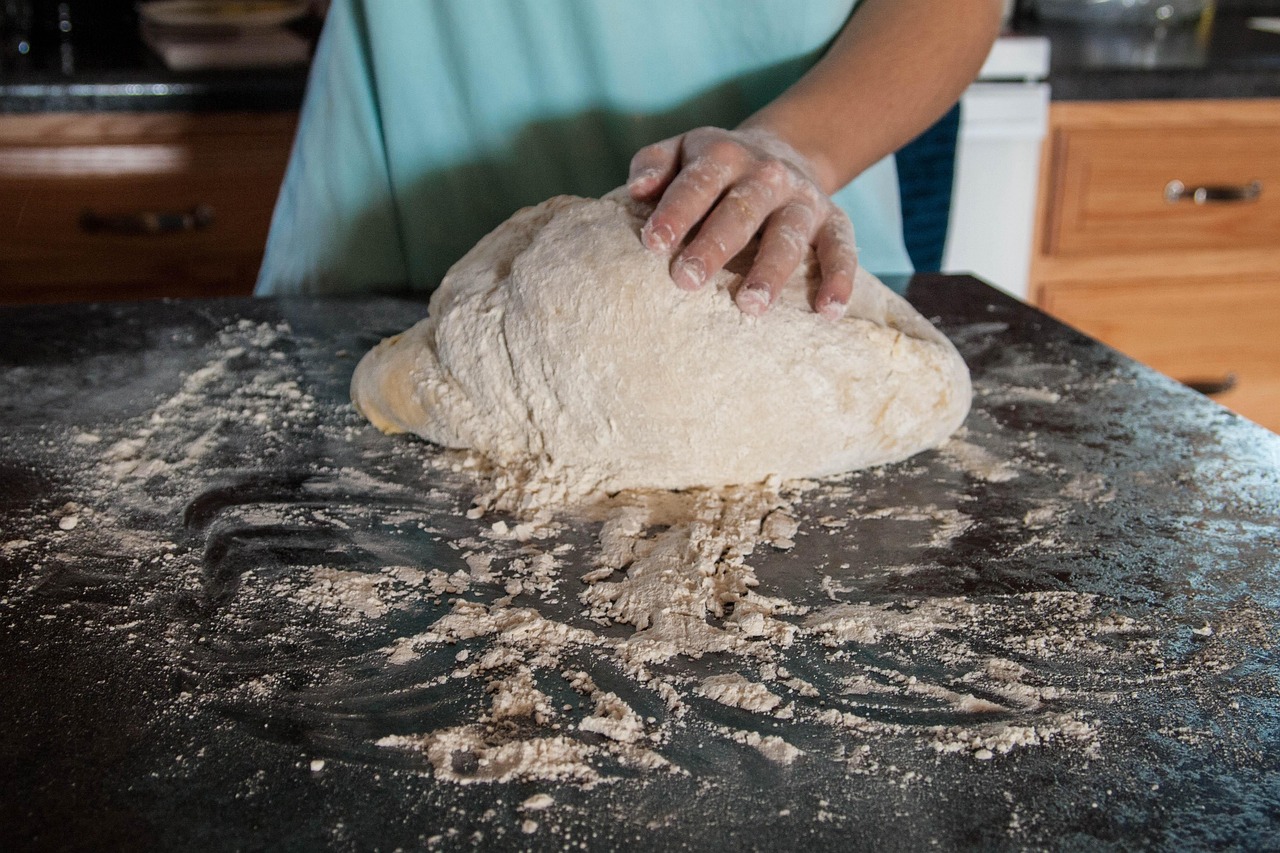
The formula stays the same. Only the flour weight changes. That is why baker's percentage works for one loaf, two loaves, or a bakery batch.
Keep hydration, salt, and yeast percentages constant and change only the flour weight.
Example: Scale One Loaf to Four Loaves
| Batch | Flour | Water | Salt | Yeast |
|---|---|---|---|---|
| One loaf | 500 g | 350 g | 10 g | 5 g |
| Four loaves | 2000 g | 1400 g | 40 g | 20 g |
Example: 70% Hydration Bread Dough
| Input | Value |
|---|---|
| Flour | 500 g |
| Hydration | 70% |
| Salt | 2% |
| Yeast | 1% |
| Water | 350 g |
| Salt weight | 10 g |
| Yeast weight | 5 g |
| Total dough | 865 g |
| Total baker's percentage | 173% |
Common Baker's Percentage Mistakes
| Mistake | What goes wrong | Better approach |
|---|---|---|
| Using total dough weight as the base | The percentages come out wrong | Always calculate percentages from flour weight |
| Forgetting some flour in mixed-flour recipes | Hydration and salt numbers become inaccurate | Count all flour in the dough before calculating percentages |
| Confusing hydration with total liquid percentage | Dough feels wetter or drier than expected | Treat hydration as water compared with flour unless you are deliberately tracking all liquids |
| Measuring tiny yeast amounts poorly | Fermentation can run too fast or too slow | Use a small digital scale for yeast and salt |
Why This Calculator Is Useful
A fixed ingredient list only gives you one batch size. Baker's math lets you answer practical questions fast:
- How much water for 500 g flour at 70% hydration?
- How much salt should I use at 2%?
- What does 65% hydration feel like?
- How do I scale one loaf to several loaves?
That is the main reason bakers use percentages instead of fixed ingredient lists.
The baker's percentage calculator helps you scale a bread recipe by using flour as 100%. Enter your flour weight, hydration percentage, salt percentage, and yeast percentage to calculate the exact grams or ounces of water, salt, and yeast for your dough.